The Hidden Cost of Strict Parenting: Why Teens Either Rebel or Disappear
Dec 03, 2025You always believed that successful parenting meant raising well-behaved, disciplined kids and you were going to do it the right way. Set the rules up front and if they veer off the path, set them straight. You grew up in a very strict household and you turned out fine, right? So why reinvent the wheel?
But then suddenly and without much warning, it all crumbles. Your child is now a teen, and where they once complied easily with your wishes, there’s tension now. If your teen is more assertive, the fights start breaking out. They break curfew, you find alcohol or drugs on them, the relationship between you starts straining – and not quietly.
Or, if they tend to be more reserved and quiet, they drift away slowly. They seem more and more distant, and although they don’t want conflict, they internalize everything - the pressure, the resentment, the fear of disappointing you. You're eventually cut off emotionally, and left wondering what happened to the kid who used to talk to you.

I’ve recently covered how permissive parenting is damaging to teens which you can read here, and while permissiveness has many drawbacks, the authoritarian approach can be even more harmful. Authoritarian parenting consistently produces one of two outcomes: rebellion or withdrawal. Here's what's actually happening
Why the Teen Years are the Breaking Point
A hallmark of authoritarian parenting is that its failure always shocks parents. "But they were such well-behaved kids!" It's as if the rug has been suddenly pulled and they're in free-fall.
Why does this keep happening? And why do parents repeat this pattern even when they bear the scars themselves?
Simple: It works. At least, it appears to. Young children are easy to control - they're small, dependent, and their brains haven't developed the capacity for complex rebellion. Strict parenting looks successful because compliance is visible. But underneath, fear is building.
When teens hit adolescence and start developing autonomy, everything changes. Their brains are wiring for independence, identity formation, and pushing boundaries - all developmentally healthy and necessary. But under authoritarian parenting, that natural development has nowhere to grow into. The fear that's been building for years finally surfaces. And it comes out one of two ways.
Why Authoritarian Parenting Creates Two Distinct Outcomes

Authoritarian parenting creates compliance through fear - fear of consequences, fear of disappointing you, fear of punishment. When fear becomes chronic, it doesn't just live in your teen's thoughts. It rewires their nervous system.
The body has three stress responses: fight, flight, or freeze. When your teen lives under constant pressure and control, their nervous system adapts to survive:
👊 Fight (Rebellion): More assertive, disagreeable teens push back. They meet your control with defiance - breaking rules, lying, sneaking out, escalating conflict. It's not disrespect, it's survival.
Their nervous system is telling them: "I have to fight my way out of this cage."
⭕ Flight/Freeze (Withdrawal): More reserved, agreeable teens internalize everything. They comply outwardly but disappear inwardly - emotionally withdrawn, living a hidden life you don't see, losing their sense of self.
Their nervous system learned: "I can't fight, so I'll hide."
Neither response is healthy. Both are adaptations to living in a chronic state of uneasiness for years.
What This Looks Like in Real Life:
The “Fight” Response
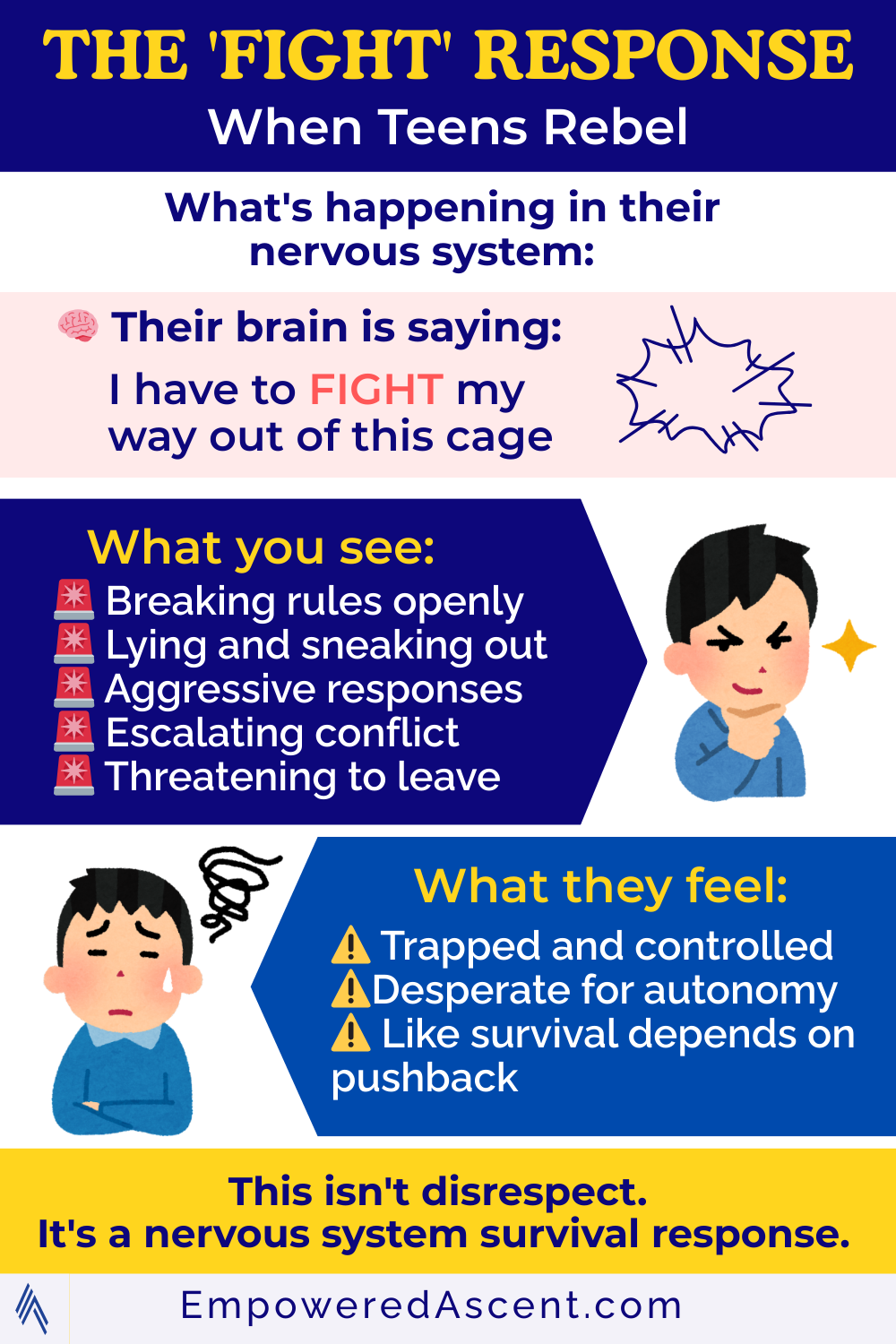
You recently caught your teen with a bottle of alcohol, which shocked you. Not only is this the first time you’ve caught on to this kind of behavior, but their response was aggressive and jarring. Tempers escalated and there was a shouting match. At the height of the tension your teen threatened to run away from home. It felt like this came out of left field and their temper suddenly erupted.
You ground them for a month. But instead of compliance, the rebellion gets worse. They sneak out. They lie more skillfully. Every punishment tightens the noose, and every tightening pushes them further away. By the time they're 17, you barely speak. They're counting down the days until they can leave. And you're wondering how the kid who used to respect you became someone you don't recognize.
The “Flight” Response
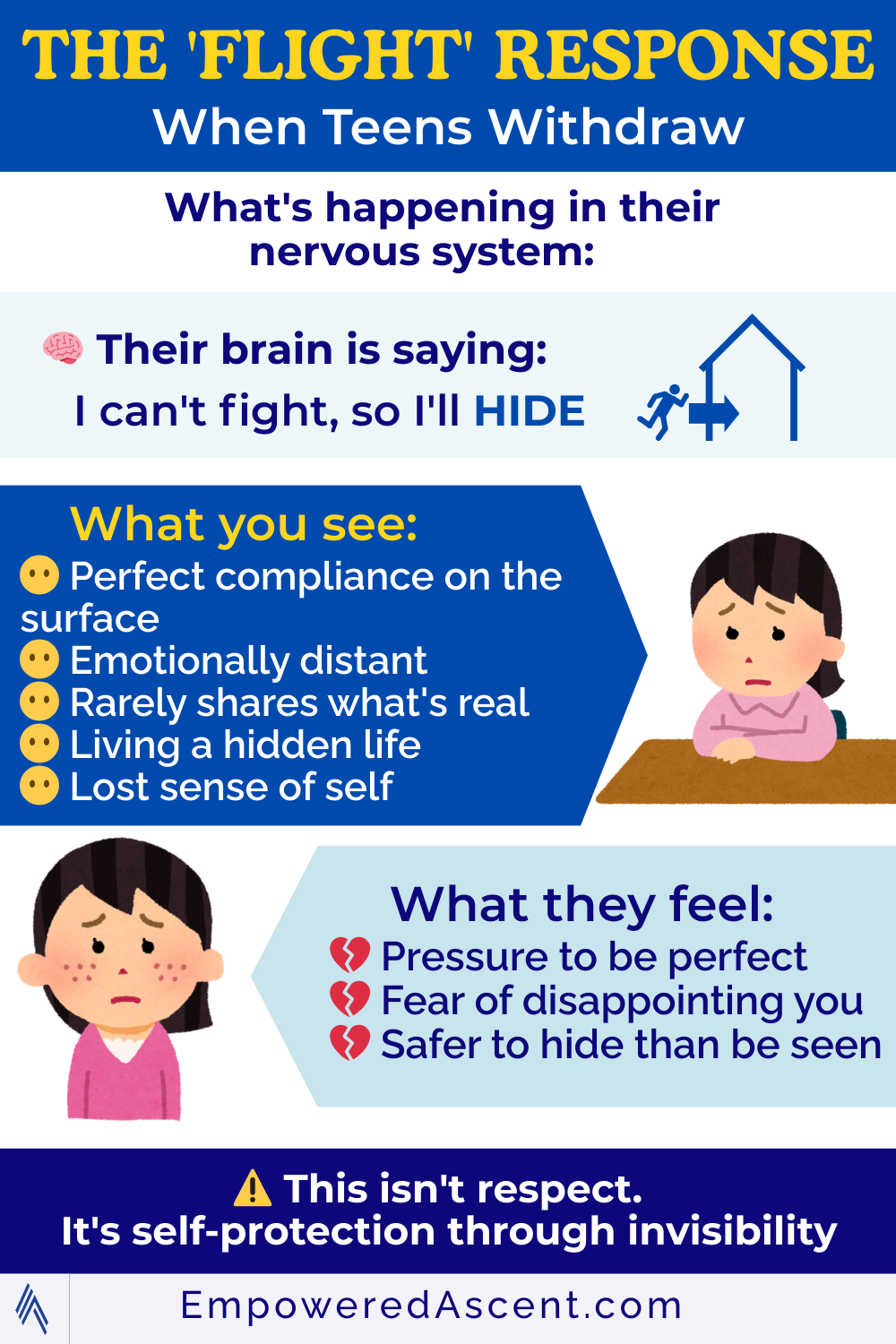
Your teen was the perfect kid. Straight A's, never in trouble, followed every rule without pushback. You were proud - proof that your strict approach worked. Sure, they were distant, but you figured that was just teenagers.
Then they leave for college. First semester you barely hear from them - until you get the call from the school. Academic probation. Grades have tanked, they're drinking heavily, partying constantly. Everything you tried to protect them from is hitting at once. When you finally reach them, they're more distant than ever.
This is the cost of authoritarian parenting. The rules, the fear - it all disappeared the moment they tasted freedom. They never learned self-regulation because you regulated for them. Compliance isn't a skill. And when the structure vanishes, they don't know how to function. They implode. And by the time you realize what's happening, the relationship you thought you had? It was never real.
The Aftermath: Long-Term Consequences of Authoritarian Parenting
Adults of authoritarian parents struggle with a multitude of issues. Here are some of the most common manifestations:
➤ They Struggle with Authority: If they respond to authority with passivity, they struggle to set boundaries and resist pressure from perceived authority figures. If they respond with aggression, they can overreact to perceived authority with sudden anger and defiance.
➤ They Lack Self Confidence: Many adults who came from authoritarian households struggle with self worth and confidence. Years of obedience without critical thinking and decision autonomy have left them feeling hollow. They never learned how to think for themselves, and this now haunts them. The world expects competence and they missed the critical lessons.
➤ They Can't Form Healthy Relationships: Many either seek out controlling partners because that dynamic feels familiar, or they sabotage healthy relationships because vulnerability feels dangerous. Some become controlling themselves, repeating the pattern their parents modeled.
➤ They're Vulnerable to Abuse and Coercion: They struggle to say "no" and become people-pleasers, while at the same time lacking confidence and self-belief. This combination is extremely vulnerable to predation, and abusers will take advantage if healing isn't prioritized.
The Solution: Empathetic & Collaborative Parenting

One of the first things I look at when mentoring a struggling teen or working with parents is the parental environment. This is because shifting a parenting approach toward empathy and teen autonomy can literally be the shift that takes them from fights and shutting down to connection and regaining respect.
The very thing that makes authoritarian parenting so tempting to parents is the thing they must relinquish to heal and move forward: Control.
Teens, especially older teens, need to develop autonomy, and that dance looks something like this:
Parent: “We need to create some structure so that you feel good and can thrive. Here’s what we would like that to look like. We also value your input and want this to feel right and doable for you. What do you think?”
If your teen is used to control, this will be a big shock, and they might be cautious or wary at first. However, if you keep consistency and empathetic warmth, they’ll come around. It might take weeks, not days - trust is rebuilt slowly. The goal is to compromise on some boundaries you both mutually agree upon. Allow their voice to be heard and respected, even if it feels uncomfortable. That’s a sign you’re building something real.
And when they test the boundaries you set - which they will - the real test will be to hold your ground without emotionality or anger. Allow the consequences you set ahead of time to be the result of their actions, nothing more or less. This will be one of the hardest parts for you as a parent. You have years of old scripts to unwrite, and this will take time and patience.
Breaking the authoritarian pattern isn't easy - especially when you're trying to undo years of conditioning, both in yourself and your teen. But the alternative - continuing down a path that leads to rebellion, withdrawal, or estrangement - is far harder. Your teen needs structure, yes. But they also need your respect, your trust, and room to become who they are. That balance is possible.
Additional Support and Guidance
If you're interested in learning more about collaborative boundaries and restoring connection with your teen, I created a free mini e-book: The 3 Pillars to Rebuild Trust and Communication with Your Teen. It walks through practical frameworks and scripts for shifting from control to collaboration. You can access it here.
I also recently wrote about the other extreme - permissive parenting and why lack of boundaries backfires just as badly. If you're trying to find the middle ground between too strict and too permissive, you can read that post here.
Thank you for your dedication to your teen and your family. Until next time.
A Simple Guide to Reconnect With Your Teen
Parenting teens can be confusing, exhausting, and sometimes frustrating — even when you love them more than anything. This free guide breaks down the 3 foundations of trust and communication, with practical exercises and scripts you can use right away to strengthen your relationship.
Instant PDF download. No spam, just helpful guidance.
Author