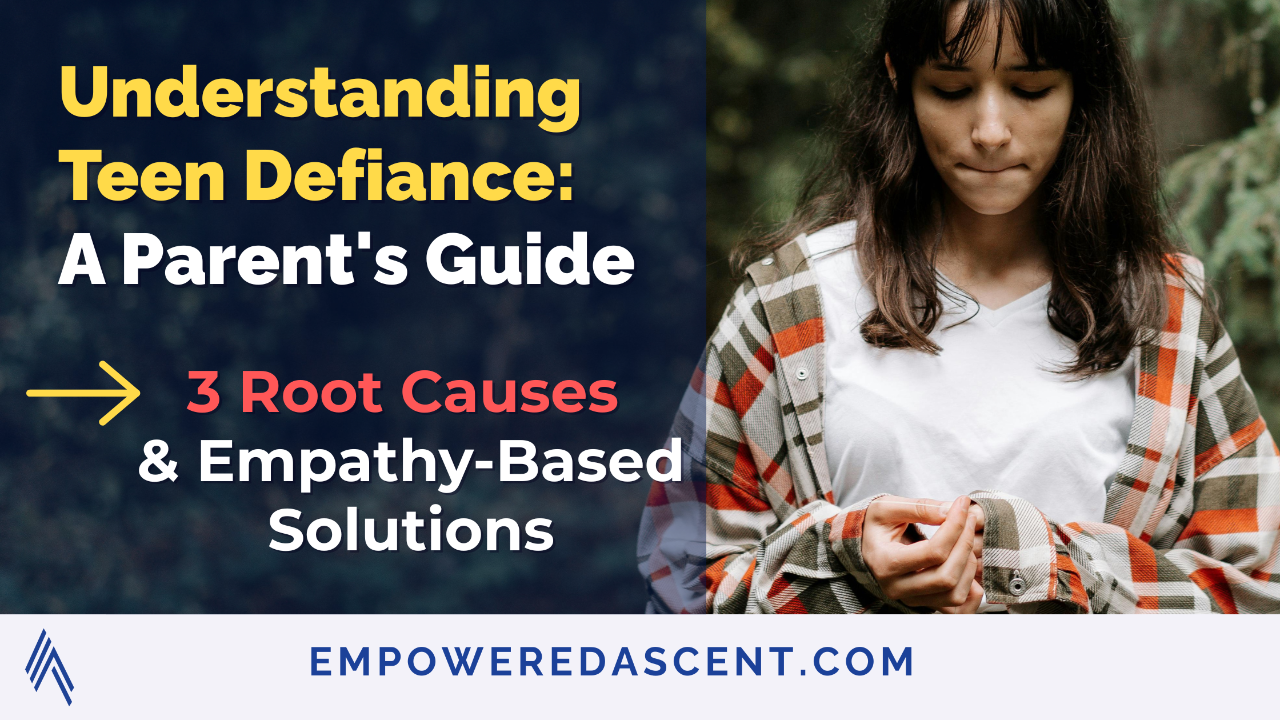
My Teen is Defiant and Disrespectful: What's Really Happening
Dec 10, 2025When your teen becomes defiant, especially when it comes seemingly out of nowhere, it’s normal for you to feel shocked, upset, and confused. Where is all of this coming from? While behavior changes can be due to any number of combined factors, there are some common patterns we see in developing teens.
I’ll highlight some of the most regularly occurring patterns, and give you my deeper insights as a teen mentor and parent coach.

Potential Cause #1: Lashing Out as a Cry for Help
I’ve seen this come up multiple times in my work with families. When teens are struggling with heavy burdens - things like anxiety, depression, and deep frustration, they will sometimes start treating those they feel safest with harshly. Angry outbursts, sudden yelling, disrespectful remarks, it’s all coming out at you, the parent, because you’re the safest person to whom they can express themselves.
Unfortunately for you, they are also teenagers. They typically lack the psychological development and experience to express themselves in open, vulnerable, and healthy ways.
Coach’s Insights: If I was working with this family, I’d focus on holding space for your teen through loving presence. Affirm to yourself that they are going through this phase and try your best not to allow them to trigger you into anger. Have pre-established boundaries so that if they cross them, there are consequences. This protects you from escalation, allows you to remain calm and follow through on boundary protection without emotionality, and gives your teen a “container” or a subset of boundaries that paradoxically will help them feel safer in the long run.
Now that we’ve addressed your response, and avoided any further back-and-forth escalations, we need to look into what is causing your teen to lash out. I’d lead the way with empathy:
“Hey, I noticed you seem to be going through a lot lately. I want you to know that we’re here for you. We’ve got your back. Is there anything you’re struggling with lately that we can support you in? Remember, it’s normal to struggle with things, it’s just part of being human.”
Yes, there’s a chance that they might not say much of anything, but you built the bridge. They might even shock you and open up about their struggles, to which you can then supply necessary help and resources. Even if nothing comes of it at first, if you keep showing up with that stable, loving presence, they’ll eventually feel safe enough to open up.
Key Notes:
- Show up with love and empathy.
- Avoid escalation/negative feedback loops
- Establish fair boundaries and consequences for their behavior.
- Build the bridge (optionally use my script, or just speak from the heart)

Potential Cause #2: The Fight for Autonomy
Teens need increasing autonomy as they develop - it's healthy and necessary. But when parents swing too far into authoritarian control or give zero structure with permissive parenting, that natural push for independence becomes defiance. The teen years are tricky, especially once they hit around 15-16 years old. That is typically when parents notice a strong uptick in defiant behaviors.
Coach’s Insights: I like to think of teen autonomy development as a game. In an ideal system that has collaborative boundaries in place, teens know exactly what the “game” is, and how to play it. If you show personal responsibility by following the boundaries, you are eventually rewarded with more autonomy and freedom. If you overstep the boundaries, you begin to lose ground, and your sense of freedom is more restricted.
The key to getting teen buy-in when establishing rules is two fold. They should be involved in the creation of the rules, and while you do have the final say, it’s very important for them to be part of it. They should also have the incentives and consequences explained to them fully. If you’d like more guidance on how to set this up, I created a free E-book with scripts on how to do that. You can download it here.
Key Notes:
- Most of the time defiance is healthy and natural as teens develop
- The key is to create a system that allows for enough autonomy
- The system should be collaborative, and there should be built-in rewards/consequences that are understood.

Potential Cause #3: Environmental Shifts
Aside from pleas for help and natural boundary pushing, there’s one other common culprit for sudden defiance in teens - their environment. For instance, teens are hypersensitive to their social environments which can cause sudden shifts in their behavior.
Maybe they went over to a new friend’s house and noticed that their friend was more aggressive with their parents.
“Wow, I can’t believe he said that… maybe I’ll try that out. My friend is pretty cool.”
To teens, being accepted by their friends is one of the most important things in their world. When taken to extremes, friend groups can create deviancy training, where teens encourage each other's rule breaking, bad behavior, and even illicit drug use.
Speaking of drugs, this is another aspect of the environment that can cause sudden defiance and aggression in teens. This is the neurochemical environment - and drugs can mess this up horribly for teens. If you suspect illicit drug use might be at the center of your teen’s defiance, I wrote a comprehensive article on addiction. It also includes a list of potential warning signs you can compare notes with. Don’t wait - drug use escalates fast.
Coach’s Insights: Understanding the role of the environment in your teen’s defiance can be tricky. It’s important to know that unhealthy changes in social environments can have far more of an impact in your teens behavior than you might expect. If you suspect they are involved with friends that are encouraging them towards defiance and risky behaviors, start by encouraging them to find positive groups they can connect with. This could be a sports team, a school club, any activity where they can connect with peers that share some of the same interests or passions as them.
That way you aren’t coming off as the mean parent that’s pushing them away from their friends (Could easily backfire into way more defiance), you’re offering opportunities for healthier connection.
Key Notes:
- Main environmental factors leading to teen defiance: Social & Neurochemical
- If you suspect unhealthy social connections (Deviancy Training), encourage new social connections with opportunity
- If you suspect drug use, check out my article linked above for immediate care and action

This is by no means an exhaustive list, but these are the umbrella causes that lead to defiant and disrespectful outbreaks.
If you need more support, I’m currently working on a 12-week course where I take parents through my empathy-first frameworks for helping teens and their families thrive. If you’d like to know when that goes live you can click here.
Or, if you’d like to work with me directly through my coaching and mentorship services you can check that out here. Always in your corner.
Thank you for supporting your teen and seeking out this information. Until next time.
A Simple Guide to Reconnect With Your Teen
Parenting teens can be confusing, exhausting, and sometimes frustrating — even when you love them more than anything. This free guide breaks down the 3 foundations of trust and communication, with practical exercises and scripts you can use right away to strengthen your relationship.
Instant PDF download. No spam, just helpful guidance.
Author