Why My Autistic Teen Won't Talk to Me (And How to Help)
Feb 04, 2026As a teen mentor, I’ve worked with many teens on the spectrum, and over the years, they’ve opened up to me about struggles they face. A major struggle I hear about consistently is communication challenges. As they age, they become more and more aware of the separation between neurotypical individuals and themselves. They face challenges that few around them truly understand beyond clinical definitions. This can lead to intensifying frustration.
I once had a client look at me and say “You know what? I hate my F*ing autism!” They were letting out anger because of how hard it is for them to communicate how they really feel with parents and peers. In that moment, I focused on being consoling and uplifting, letting them know that I appreciated them for exactly who they were and that their uniqueness is something to be celebrated. But I couldn’t understand on an emotional level, because the burden they bore wasn't something I could know through lived experience.
I've helped autistic teens navigate this turbulence, and I'll share some key insights for parents.

Communication Pressure: Avoiding Overwhelm
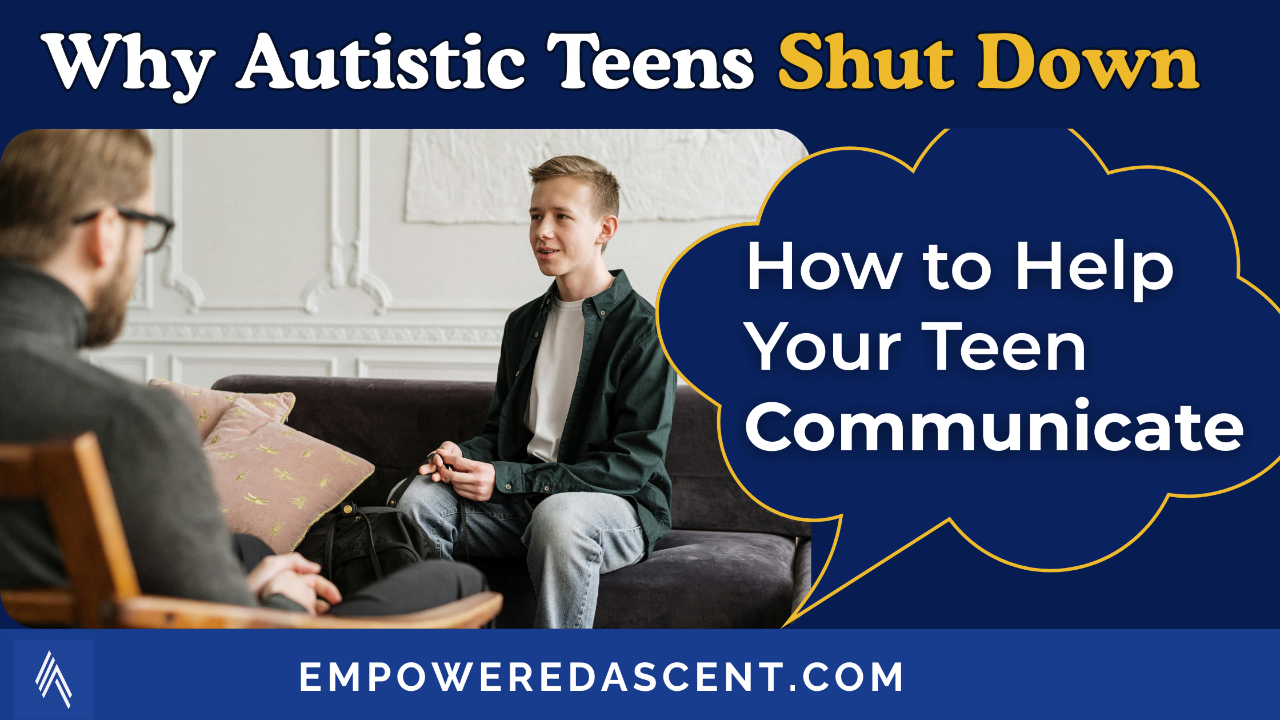
Autistic teens can quickly feel overwhelmed when they sense they're not being understood or when the conversation moves too fast. The pressure of “on-the-spot” conversations, especially ones that become emotionally charged, can lead to shutdown - they might stop talking, leave the room, or seem to 'check out' entirely. This is where cultivating patience as a parent becomes incredibly important, because autistic teens often need more time to formulate their thoughts and respond thoroughly.
This is often why autistic teens can talk openly with teachers, mentors, or therapists, but struggle with parents - the emotional stakes are lower, and there's less history of misunderstanding.

How Parents Can Support Better Communication
One of the most important things you can do to encourage healthy communication is show consideration. Make sure that when you’re having deeper, more emotionally sensitive conversations, that you give your teen time to think and process. When they feel rushed during emotional conversations, they're more likely to shut down or have a meltdown.
It can be valuable to offer alternative communication methods. Maybe ask your teen:
“Hey, would you prefer to write this out and give it to me later, or even type it out in a text and send it to me? I want you to feel comfortable sharing your thoughts and emotions and whichever method feels best to you we’ll use.”
Because autistic individuals have a heightened sensory experience, emotionally charged conversations can take on an entirely new level of stress. With that in mind, I also recommend whenever possible you keep your emotional state well regulated.
One of the best ways to stay regulated is making sure you have a life outside of parenting - hobbies, friendships, self-care that fills your cup. The more you give back to yourself and care for your own psychological and emotional needs, the better you can show up for your teen. If you’d like more insights into this specifically, check out my guide on parent burnout.
When you're calm and grounded, your teen can feel that safety. When you're anxious or reactive, they absorb that stress and communication becomes impossible.

The Most Important Step: Becoming an Expert on YOUR Teen
While I believe in my experience and advice, there’s no substitute for the focused, intentional learning of your own unique teen. The best parenting approach varies greatly from teen to teen. For autistic teens, this variance is even greater due to differences in sensory processing.
Spend time learning about your teen. Whenever they start to get agitated or shut down, take notice of as much as you can: Location, tonality, subject of conversation, outside variables (were they already stressed about school, overwhelmed from sensory input earlier).
If something seems to work seamlessly and you’re pleasantly surprised, analyze that scenario as best you can. Try to figure out why, and build your communication plan from that tried-and-true base. If you stay consistent with this observation and adaptation, you’ll likely be amazed at the positive transformation you see, and your connection with your teen will continue to flourish.
Further Reading and Resources
Supporting an autistic teen requires understanding their unique needs while building strong communication. These posts can help you navigate related challenges:
- [My Teen Won't Talk to Me Anymore: How to Rebuild Communication] - Many of the connection-building strategies here apply to autistic teens who've withdrawn emotionally.
- [My Teen Ignores Everything I Say: How to Get Through] - If your autistic teen seems to tune you out, this explores collaborative communication approaches that reduce resistance.
- [The Hidden Cost of Strict Parenting: Why Teens Either Rebel or Disappear] - Autistic teens especially need flexibility and understanding. This explores why rigid parenting backfires.
If you're looking for guidance on building trust and collaborative communication that works for neurodivergent teens, I created a free mini e-book: The 3 Pillars to Rebuild Trust and Communication with Your Teen. It includes frameworks for creating the kind of relationship where your teen feels safe being themselves. You can download it here.
Thank you for showing up for your teen. Until next time.

A Simple Guide to Reconnect With Your Teen
Parenting teens can be confusing, exhausting, and sometimes frustrating — even when you love them more than anything. This free guide breaks down the 3 foundations of trust and communication, with practical exercises and scripts you can use right away to strengthen your relationship.
Instant PDF download. No spam, just helpful guidance.
Author