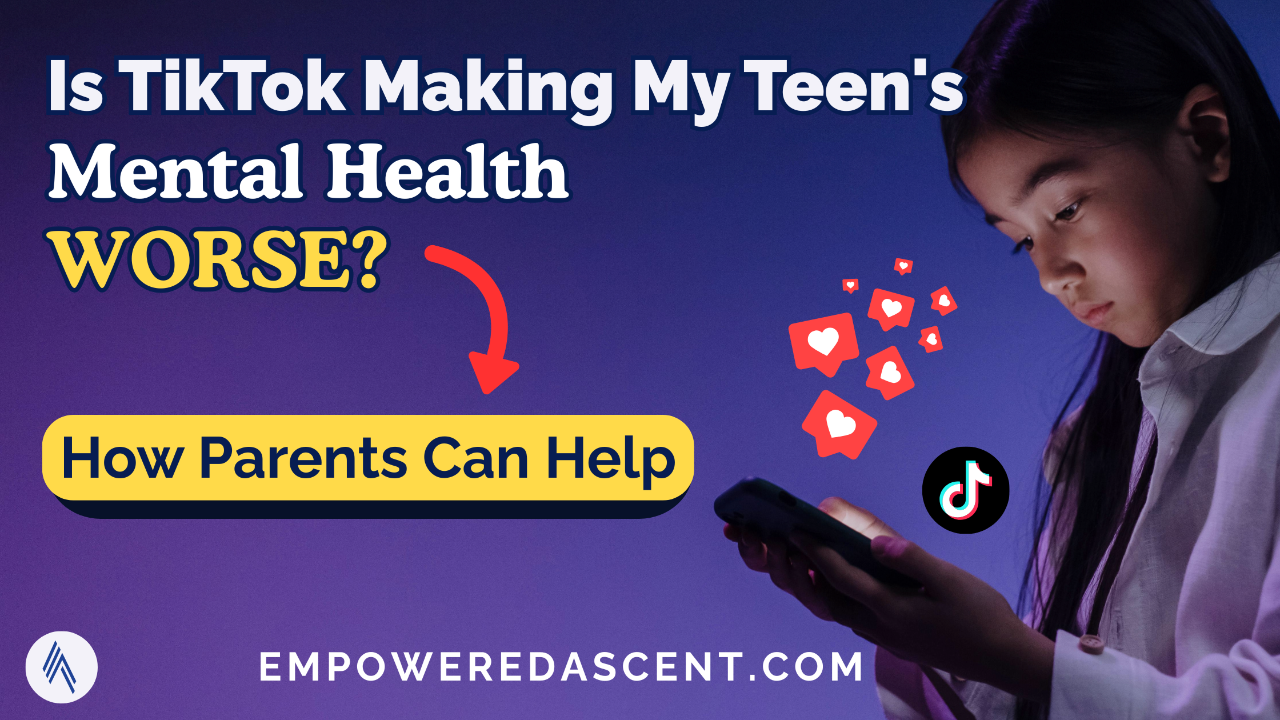
Is TikTok Making My Teen's Mental Health Worse? How Parents Can Help
Dec 30, 2025“Yeah mom.” “Yeah, Dad” Your teen responds absentmindedly to what you’d just asked them.
You know that response, you know what it means. You look over and see them folded over their phone. Their thumb rhythmically flicking upwards on the phone screen, their face illuminated by video after video. Each flick of the thumb repurposing their brain as a vehicle of endless content consumption.

In recent advertisements, TikTok is leaning into this idea that they are helping kids learn (No doubt as a response to all the bad publicity they’re getting from angry parents). And while there might be creators out there posting helpful content, it’s clear that kids, teens, and even many adults are struggling with addiction to these platforms.
These companies design highly addictive algorithms with one goal: to take over our greatest commodity–Our attention.
Why Teens Bear the Brunt of It
Just like how the tobacco industry has successfully targeted teens through “candy” or “fruit” flavored vape pens, these social media companies take advantage of the vulnerable, developing brains of teens. Because their algorithms are designed to keep you on the platform and are heavily addictive, they pose a greater risk to teens, because their brains exist in a precarious balance during adolescence.
Teen brains have extra sensitive limbic systems, which includes the brain's reward center, while at the same time have underdeveloped prefrontal cortexes, which govern decision making and impulse control. This combination leaves them extra vulnerable to addictive social platforms. According to recent research, teens in the U.S. spend up to 8.5 hours on their phones each day. These companies continue to grow and flourish, while the mental health of our teens plummets.

How Parents Can Help
While the statistics might seem grim, it’s important to note that as a parent, you can positively influence your teen in many ways. First and most important is modeling healthy behaviors and device usage. Some parents instill rules like no phones in the bedroom, yet they themselves won’t follow them. They think it's different because they're adults. It's not. Teens will be far more compliant with these rules and systems if the parent takes part. This will not only build more connection and respect, but will likely help you in the long run. After all, we all need to spend less time in front of screens.
➡️ Coach’s Insights: Creating systems for your household to follow is crucial nowadays. The research is clear that the more time spent on tech - specifically the social platforms like TikTok, instagram, and youtube shorts, the higher the rate of anxiety and depression, as well as trouble focusing. I recommend that you come together as a family, and make collaborative goals regarding screen limits. The more collaborative and unified, the better your chances at getting teen buy-in.

Once systems are in place to help, it’s important to know what you're up against. The most common complaint of teens who seem to fight tooth and nail for their phones is that without it they are extremely bored. This is the long-term ramification of an adolescent brain that has been continuously conditioned with dopamine spikes. They are accustomed to it, and when it’s gone they notice, and it doesn’t feel good.
➡️ Coach’s Insights: If you can successfully peel them away from their phone, even for an hour or two more each day, this is newfound time that can be spent fostering connection, creativity, and independence. This is typically where parents drop the ball - They reduce the addictive screen use, but don’t help their teen replace it with more meaningful things.
If your teen has a hobby or passion, try to encourage them to spend more time exploring that. If they don’t seem interested in much, spend some time talking with them and brainstorm things they might be keen on trying. This could even be an opportunity to bond, and you could join them as they explore different interests.
For one teen, it was learning guitar. For another, cooking with their parents. Even hiking together counts - anything that’s engaging for them without screens.

Further Reading and Resources
Managing your teen's screen time is just one piece of helping them thrive. If you're dealing with broader behavioral or connection issues, these posts might help:
- [My Teen is Defiant and Disrespectful: What's Really Happening] - Defiance often increases when teens are overstimulated and disconnected. Learn what's underneath the behavior and how to address it.
- [Permissive Parenting: Why No Boundaries Hurts Your Teen] - If you've been avoiding setting limits around screens, this post explains why structure actually helps teens feel safer.
- [Breaking the Cycle: 4 Harmful Parenting Patterns That Keep Teens Stuck] - Screen addiction often thrives in certain family dynamics. Identify patterns that might be making things worse.
If you're looking for more guidance on building connection and collaborative boundaries with your teen, I created a free mini e-book: The 3 Pillars to Rebuild Trust and Communication with Your Teen.
It includes practical frameworks and scripts for creating the kind of partnership that makes screen limits actually work. You can download it here.

Thank you for showing up for your teen. Until next time.
A Simple Guide to Reconnect With Your Teen
Parenting teens can be confusing, exhausting, and sometimes frustrating — even when you love them more than anything. This free guide breaks down the 3 foundations of trust and communication, with practical exercises and scripts you can use right away to strengthen your relationship.
Instant PDF download. No spam, just helpful guidance.
Author